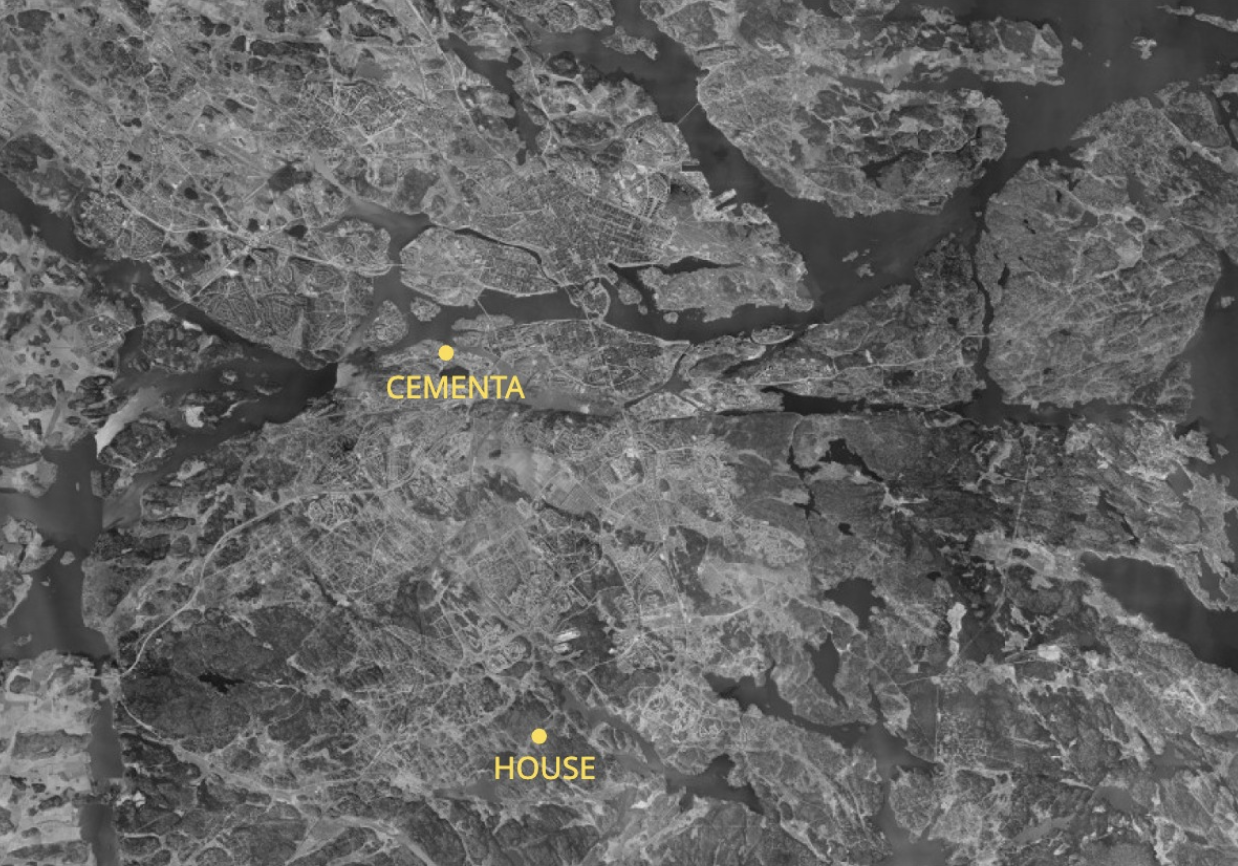
The House
Installation - Stockholm 2026
Shortly after the Finnish Winter War finished the 13th of March 1940 my grandfather arrived in Sweden on an undocumented ship from Finland together with a group of undocumented Estonian young men. He was an Estonian engineer and paperless refugee. For sometime after he lived in a shed in the forest.
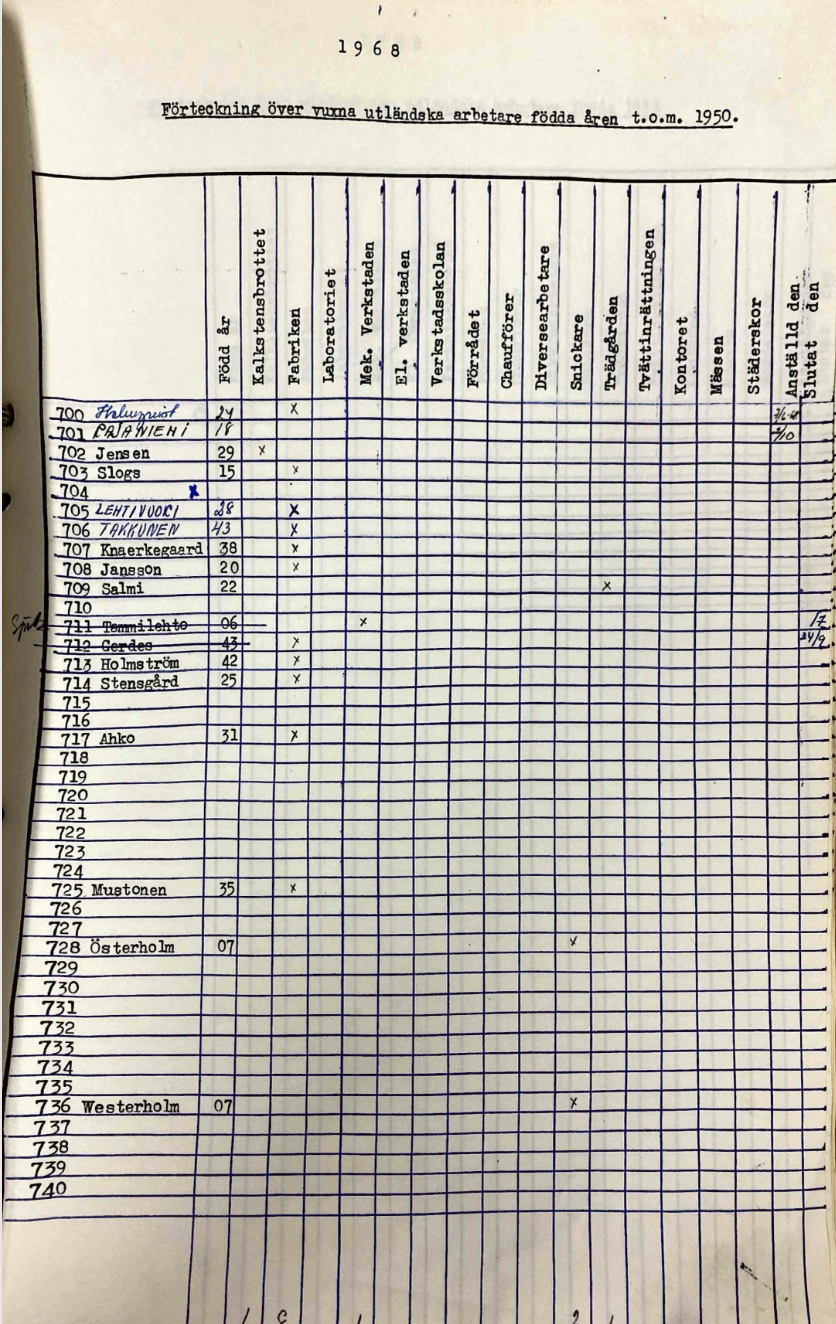
At some point he enters the Swedish offical records and I find him as a line item in Cementas "Förteckning över vuxna utländska arbetare". An "X" marks the spot. He could be found in Fabriken. His leaving date is recorded as the 28/2 in 1970.
He didn't talk about his story. My grandfather died in his sleep in 2012, not long before my dad died in a car accident, and I inherit a shed in the forest in Huddinge south of Stockholm. 13 years later, in 2025, I pay it a visit. The house has collapsed and the plot of land that used to be in the forest is now surrounded by encroaching suburban sprawl.
His old house, I will now move to his old place of work.
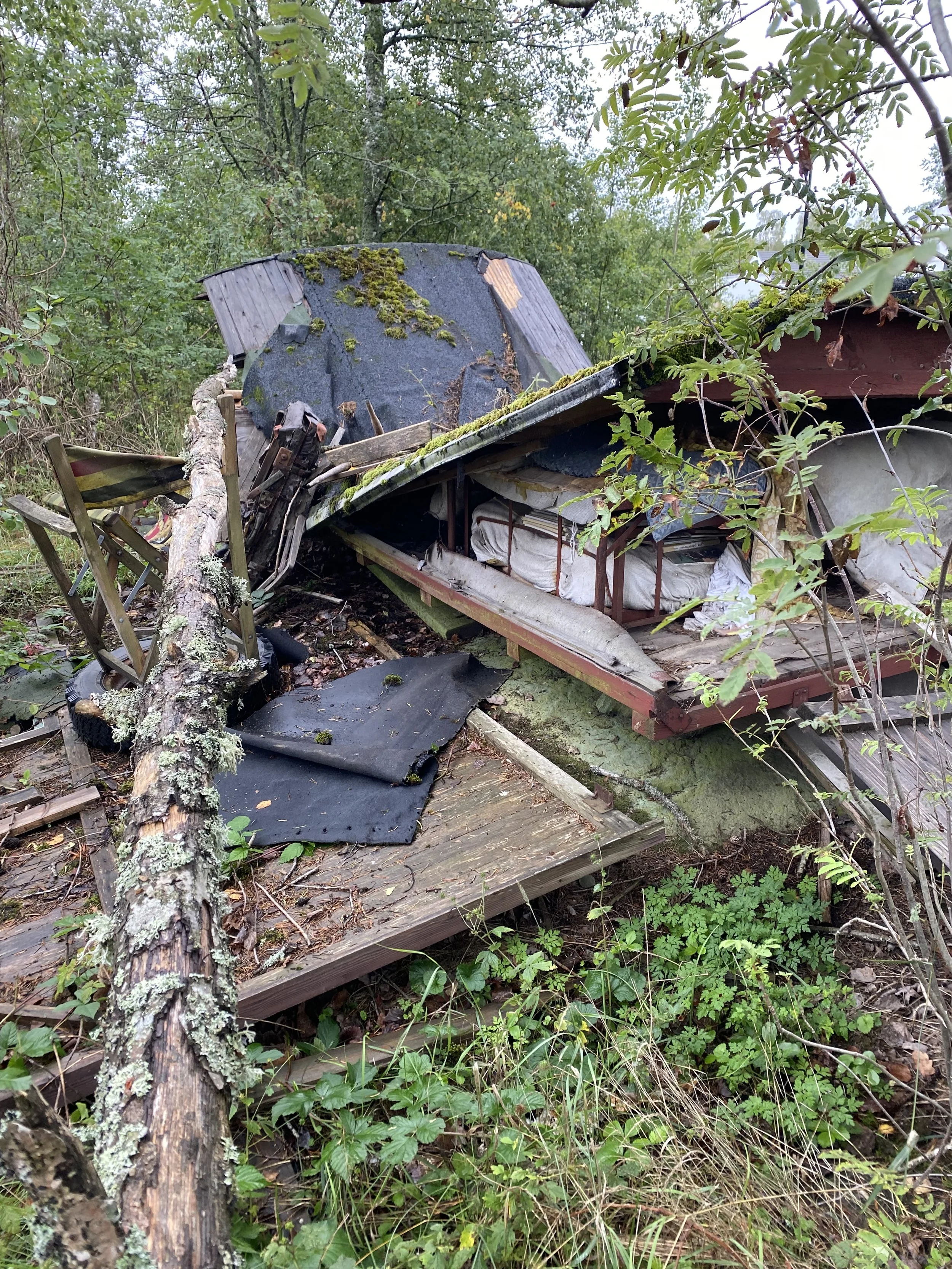
Things are permanent, until they are not,
and every building is just a temporary aggregation of a vast number of elements.
I want t o move the house, in some format, and introduce it on Lovholmen and the Cementa silos.
In one sense, this building is the collaborative creation of many, built from the countless cumulative actions of countless anonymous people .
Through the process of sorting and itemising of each component: sheets and books, screws, roof and framing, a prepping of a sort of circularity, this building speaks of the invisible hands behind us.
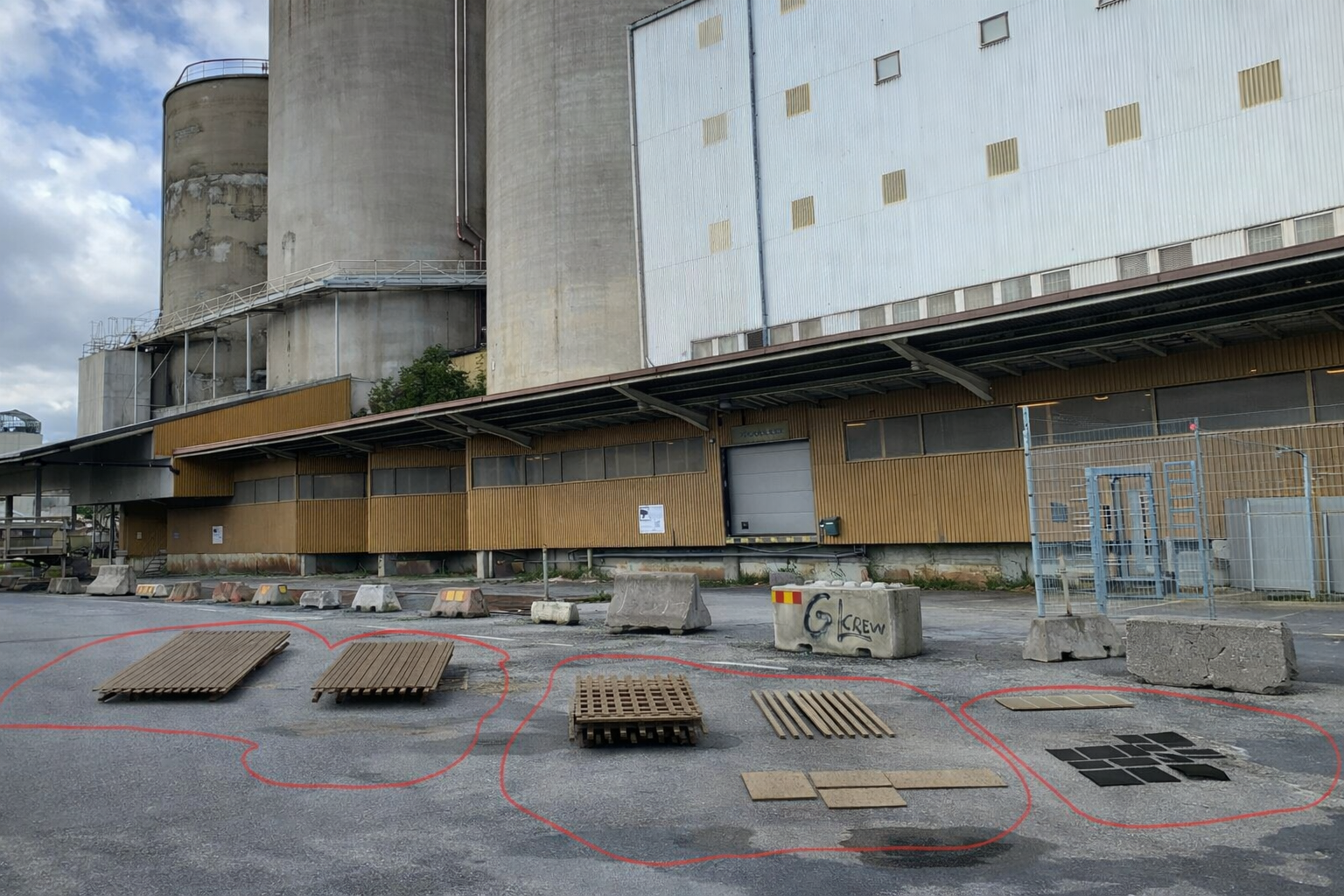
The perceived dichotomy of the Cementa silos and the collapsed workers home is broken down through the process of relocation.
The move, from the site of home, to the site of work, coincides with the time both are about to disappear, creating a time scape for labour, material, and memory to collide.